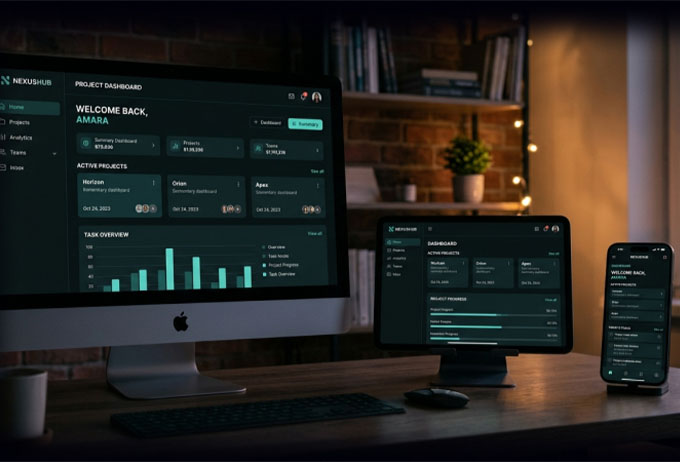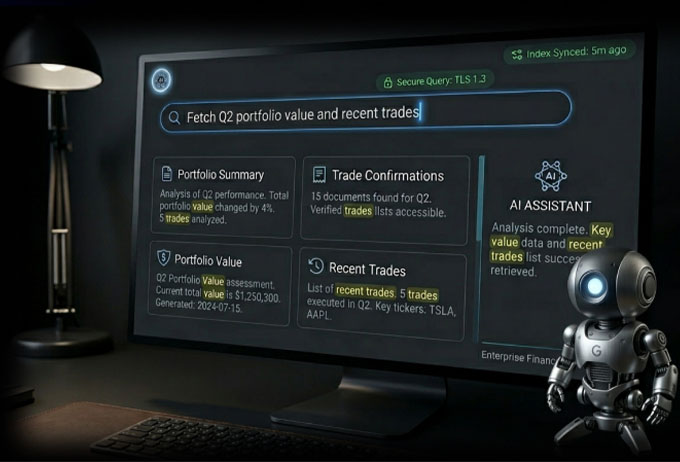
Enterprise AI Chatbot: 40% Faster Decisions
ICANIO built an enterprise AI chatbot using LLMs, RAG, and secure data access, increasing enterprise data accessibility by 30% and accelerating business decision-making by 40%.
Icanio delivers healthcare life sciences industry solutions for hospitals, payers, and life sciences organizations that need to turn clinical and operational data into secure, standards-compliant software. Our HIPAA compliant software development practice covers EHR/EMR integrations, telemedicine platforms, remote patient monitoring, revenue cycle systems, population health analytics, patient engagement portals, and medical device software.
30–50%
99.9%+
Hours Saved
6
Patients now expect the same connected, self-service experience from a health system that they get from any consumer app, from instant scheduling to real-time test results. At the same time, regulators are tightening requirements around HIPAA privacy, HL7 FHIR interoperability, and AI oversight in clinical settings. For healthcare and life sciences leaders, the pressure to modernize without compromising compliance has never been higher.

Every healthcare application must satisfy HIPAA privacy and security rules while exchanging data through HL7 FHIR and DICOM standards, and most internal teams lack the specialized bandwidth to do both correctly.

Clinical data lives across disconnected EHR/EMR systems, lab feeds, and legacy databases, making a single, trustworthy patient record difficult to assemble.

Virtual care platforms need to handle real-time video, scheduling, and clinical documentation at scale without compromising uptime or patient privacy.

Providers and life sciences organizations sit on vast volumes of clinical and operational data but lack the analytics infrastructure to act on it in real time.
Each vertical has engineering teams staffed by specialists who have spent years building production systems in that industry.

We map data flows, consent boundaries, and audit requirements before writing code, so HIPAA compliance is designed into the architecture rather than retrofitted after launch. Encryption at rest and in transit, role-based access control, and detailed audit logging are default requirements on every engagement.
HIPAA
ISO 27001
DevSecOps
Audit Logging

We connect new applications to the EHR platforms clinicians already use, mapping HL7 v2 segments and FHIR resources, reconciling patient identity across systems, and validating DICOM imaging pipelines end to end. Integration layers ship with their own test harnesses and monitoring so vendor upgrades don’t break interfaces silently.
HL7 FHIR
DICOM
EHR/EMR Integration
HL7 v2

Our telemedicine platform development spans scheduling, secure video visits, e-prescribing, and billing workflows tied to payer-specific telehealth codes. Remote patient monitoring pipelines normalize device data from scales, glucometers, and wearables into clinician dashboards with configurable alert thresholds.
Telehealth
Remote Patient Monitoring
Wearables
e-Prescribing

We turn clinical records, imaging, lab results, and claims data into structured pipelines that power dashboards for readmission risk, care variation, and population health management. Where AI-assisted diagnostic or triage support is built, a clinician stays in the review loop with explainable outputs and documented model provenance.
Clinical Data Analytics
Population Health
AI Diagnostics
Data Warehousing

We build patient portals, care coordination tools, and revenue cycle management systems that tie eligibility, claims, and denial management into one workflow, alongside Software as a Medical Device built to IEC 62304 and ISO 14971 with full requirements traceability for regulatory submissions.
Patient Portals
Revenue Cycle Management
SaMD
IEC 62304
We deliver secure, compliant healthcare and life sciences solutions globally, supporting hospitals, payers, and life sciences organizations across India, the USA, the UK, Europe, and APAC.

HIPAA, HL7 FHIR, and SaMD regulatory pathways are mapped and embedded into the architecture before a single line of code is written, not bolted on after launch.

Our teams include people who have worked inside clinical operations, health IT departments, and life sciences organizations, so requirements start from how care is actually delivered.

AI-assisted diagnostic and triage tools ship with explainable outputs, documented training data provenance, and a clinical sign-off step before any finding reaches a patient record.

Regulations change and EHR vendors push upgrades on their own schedule, so our engagements are structured as ongoing partnerships that adapt systems as the landscape moves.


Treating HIPAA as a Checkbox – Bolting on compliance after launch instead of designing it into the architecture from day one creates audit gaps and unlogged access paths that surface during a review.

Positioning AI as an Autonomous Diagnostic Authority – Deploying AI-driven diagnostic or triage tools without a qualified clinician in the review loop risks patient safety and leaves the system unable to explain its own findings.

Ignoring Interoperability Standards – Building systems that don’t speak HL7 FHIR, DICOM, or X12 fragments the patient record and creates costly integration debt that surfaces the first time a new system needs to connect.


Compliance-First Architecture – HIPAA, HL7 FHIR, and SaMD regulatory pathways are embedded into the architecture from day one; encryption, access control, and audit logging are structural, not cosmetic.

Human-in-the-Loop AI – Every AI-assisted diagnostic or triage tool ships with explainable outputs, documented training data provenance, and a clinician sign-off step before a finding reaches a patient record.

Standards-Based Interoperability From Day One – HL7 FHIR, DICOM, and X12 compatibility are planned into the architecture before the first integration is built, so new systems connect cleanly with the infrastructure already in place.
From bold ideas to breakthrough execution – our case studies showcase how we transform business challenges into innovation-led success stories.
ICANIO built an enterprise AI chatbot using LLMs, RAG, and secure data access, increasing enterprise data accessibility by 30% and accelerating business decision-making by 40%.
ICANIO rebuilt a monolithic payroll system into a scalable multi-tenant SaaS platform, achieving 50% faster workflow setup, 40% less manual effort, and 3x better user experience.

Explore ICANIO’s Wealth Spectrum CSV parser platform, automating 10 CSV APIs into real-time Excel reports, cutting manual effort 30% and delivering insights faster.
ICANIO’s AI API performance testing platform cut testing setup time by 50% and tripled test coverage using generative AI, automated YAML test creation, and multi-region load test
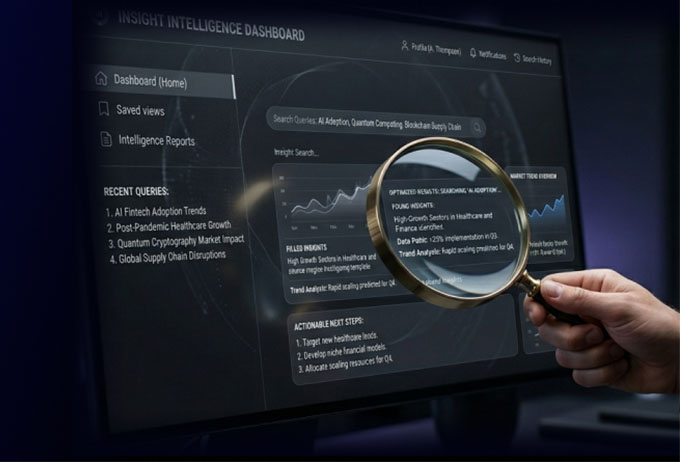
SmartSearch cut search deployment time by 50% and improved search relevance 3x with no-code NLP, vector search, and multi-engine AI support.
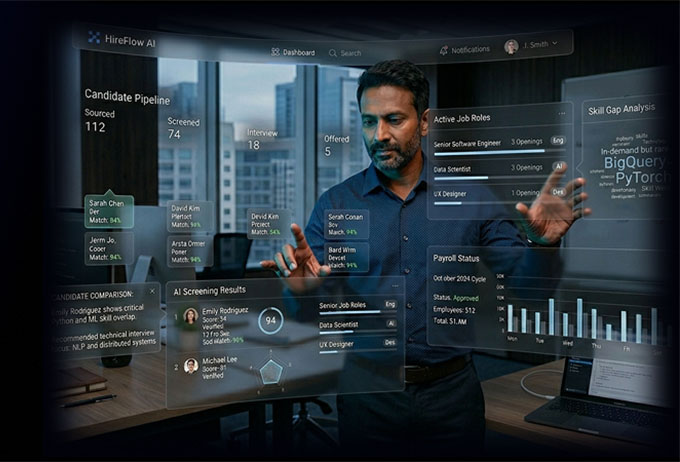
AI-powered digital job assistant that automates repetitive job search tasks, provides personalized guidance, and helps job seekers manage applications efficiently.
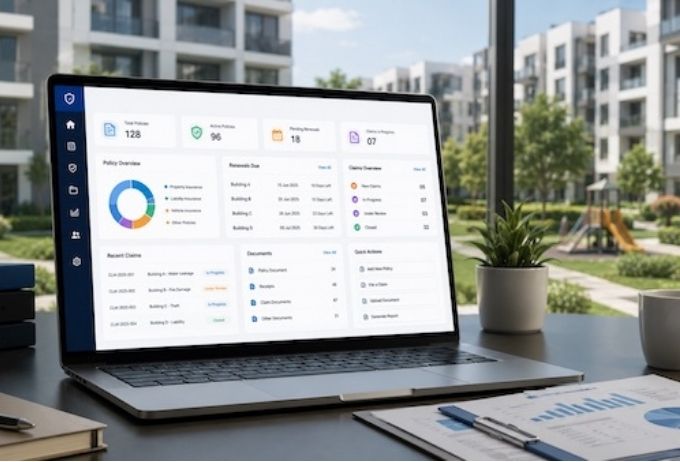
Icanio builds insurance management platforms that automate policy renewals, claims, compliance, and document management. It cuts operational costs by 30%, speeds claims by 50%, and

Icanio builds cloud LIMS platforms that automate sample tracking and reporting. It cuts manual effort by 70%, delivers 3x faster reports, and ensures QR-verified results.

Icanio builds enterprise agentic AI frameworks that optimize multi-agent workflows and LLM integration. It improves stability by 40%, enhances reasoning by 3x, and enables scalable

We treat HIPAA compliant software development as an architecture decision made before coding begins, not a checklist applied afterward. That includes encryption at rest and in transit, role-based access controls, detailed audit logging, signed business associate agreements with infrastructure vendors, and security reviews built into every release cycle rather than a one-time assessment.
Yes. Our EHR EMR integration services work with HL7 v2 interfaces, FHIR APIs, and DICOM imaging pipelines to connect new applications to the EHR platforms already in use across your facilities, including patient identity reconciliation and interface engine mapping that survives vendor upgrades.
We build AI-assisted diagnostic support tools designed to keep a qualified clinician in the review loop rather than positioning any model as an autonomous diagnostic authority. Every deployment includes explainable outputs, documented training data provenance, and a clinical sign-off step before AI-generated findings reach a patient record.
Timelines vary with regulatory scope, but a focused module such as a patient portal or telehealth workflow typically runs several months from discovery through production launch, while a full EHR integration or SaMD-track medical device project runs considerably longer given the verification, validation, and compliance documentation involved.
Yes. We support life sciences and pharmaceutical organizations building clinical trial data platforms, research data pipelines, and connected medical device software, applying the same regulatory-first engineering discipline we use for hospital and payer clients.
Talk to our experts about how our approach fits your sector’s requirements.
Quick Links
Careers
Internship
Contact Sales
© 2025
Icanio - All rights reserved.