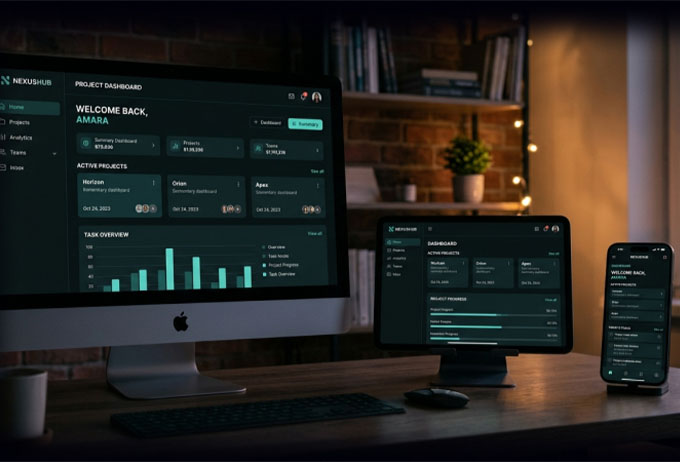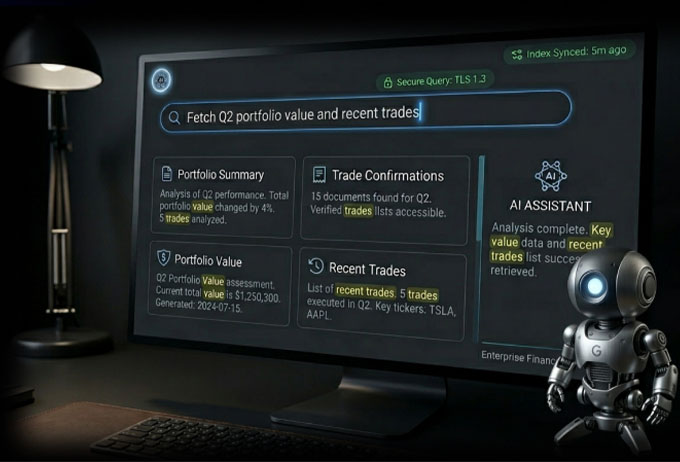
Enterprise AI Chatbot: 40% Faster Decisions
ICANIO built an enterprise AI chatbot using LLMs, RAG, and secure data access, increasing enterprise data accessibility by 30% and accelerating business decision-making by 40%.
Icanio delivers education elearning industry solutions for schools, universities, and edtech companies that need learning experiences that scale. We build learning management systems, virtual classroom platforms, student analytics dashboards, adaptive learning engines, and content delivery infrastructure tailored to how modern learners actually engage.
30–50%
99.9%+
Hours Saved
6
Today’s learners expect engaging, personalized experiences across every device, while institutions and edtech companies are under pressure to scale to large cohorts without sacrificing reliability during enrollment and exam periods. At the same time, student data privacy requirements, particularly for K-12 environments under FERPA, demand disciplined architecture rather than a checklist applied after launch. For education leaders and edtech founders, closing the gap between what learners expect and what legacy systems can deliver has never been more urgent.

Learning management systems often operate in isolation from student information systems and content libraries, forcing manual work and creating inconsistent learner data.

Most content delivery infrastructure treats every learner identically, missing the chance to adapt pacing and difficulty to individual progress.

Institutions often lack the student analytics needed to identify at-risk learners early enough to intervene effectively.

Virtual classroom platforms must support live video, collaboration, and assessment at scale, and performance issues directly undermine the learning experience.
Each vertical has engineering teams staffed by specialists who have spent years building production systems in that industry.

We build learning management systems, virtual classroom platforms, and content delivery infrastructure for K-12 institutions, higher education, and edtech companies scaling a commercial product to thousands of schools or millions of learners. We design around real usage patterns, including live sessions, asynchronous coursework, and timed assessments running side by side on one platform.
LMS Development
Virtual Classrooms
Content Delivery
Cloud-native

Our adaptive learning engines use assessment results and engagement data to personalize pacing, content difficulty, and recommended next steps per student. Paired with a student analytics dashboard, instructors and administrators get early visibility into learners who are falling behind, in time to intervene rather than after the term ends.
Adaptive Learning
Student Analytics
Personalization

We build virtual classroom platforms with reliable video, breakout collaboration, and integrated assessment engineered for large concurrent class sizes, plus LMS integrations that connect them to existing student information systems, gradebooks, and single sign-on so faculty are not forced into a separate tool for every part of a course.
Virtual Classroom
LMS Integration
SSO
Accessibility

We build assessment engines supporting timed exams, randomized question pools, rubric-based grading, and configurable proctoring integrations that scale to the stakes of the assessment. Content authoring tools and pipelines are built around SCORM, xAPI, and LTI standards, so course content moves between platforms without being rebuilt.
SCORM/xAPI/LTI
Proctoring
Assessment Engines

We design with FERPA-aware architecture from the outset, including role-based access controls, audit logging, and data minimization for K-12 and higher education records. We also build AI-assisted tutoring and content generation as an extension of the adaptive learning engine, with instructors kept in control of what reaches students.
FERPA
Data Privacy
AI Tutoring
Audit Logging
We deliver engaging, privacy-conscious education and e-learning solutions globally, supporting K-12 institutions, higher education, and edtech companies across India, the USA, the UK, Europe, and APAC.

We design for measurable outcomes, including course completion rates, learner satisfaction, retention, and administrative efficiency, not a feature list that never gets used once the contract is signed.

Our engineering discipline keeps platforms stable during high-stakes periods like final exams and open enrollment, when there is zero tolerance for downtime affecting thousands of learners at once.

Privacy considerations shape our data models, integration choices, and dashboard design from the outset, not a checklist applied at the end of a project once launch is already scheduled.

We keep refining adaptive learning engines and analytics as usage data accumulates, extending our work well past initial launch into every subsequent term, enrollment cycle, and curriculum revision.


Treating Student Data Privacy as an Afterthought – Bolting FERPA-aware controls onto a finished platform late in a project is a compliance and trust disaster waiting to happen for K-12 and higher education alike.

One-Size-Fits-All Content Delivery – Pushing every learner through an identical sequence regardless of performance wastes the chance to personalize pacing and difficulty to how each student is actually doing.

Ignoring Interoperability Standards – Building course content and platforms outside SCORM, xAPI, and LTI standards traps that content in one system and can quietly block procurement deals with institutions.


FERPA-Aware Architecture from Day One – Role-based access controls, audit logging, and data minimization are structural parts of the architecture, not a checklist applied after the interesting engineering work is done.

Adaptive, Data-Driven Learning Design – Adaptive learning engines and student analytics dashboards are built on clean, continuously flowing assessment and engagement data so instructors can intervene early, not after the term ends.

Standards-Based Content Interoperability – Content authoring and delivery are built around SCORM, xAPI, and LTI from the outset, so course content moves between a learning management system, content libraries, and third-party tools without being rebuilt.
From bold ideas to breakthrough execution – our case studies showcase how we transform business challenges into innovation-led success stories.
ICANIO built an enterprise AI chatbot using LLMs, RAG, and secure data access, increasing enterprise data accessibility by 30% and accelerating business decision-making by 40%.
ICANIO rebuilt a monolithic payroll system into a scalable multi-tenant SaaS platform, achieving 50% faster workflow setup, 40% less manual effort, and 3x better user experience.

Explore ICANIO’s Wealth Spectrum CSV parser platform, automating 10 CSV APIs into real-time Excel reports, cutting manual effort 30% and delivering insights faster.
ICANIO’s AI API performance testing platform cut testing setup time by 50% and tripled test coverage using generative AI, automated YAML test creation, and multi-region load test
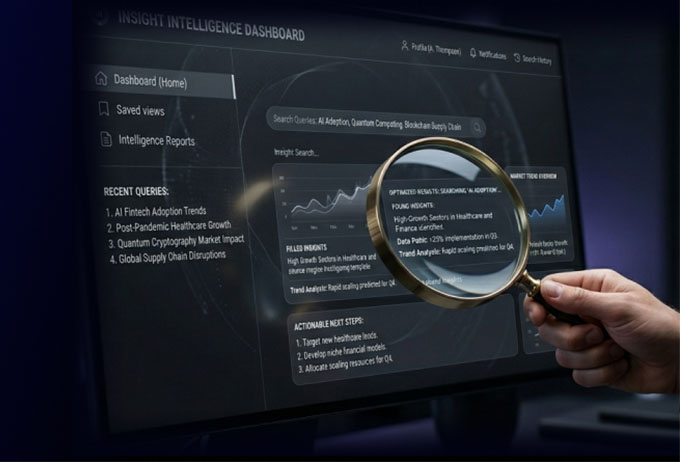
SmartSearch cut search deployment time by 50% and improved search relevance 3x with no-code NLP, vector search, and multi-engine AI support.
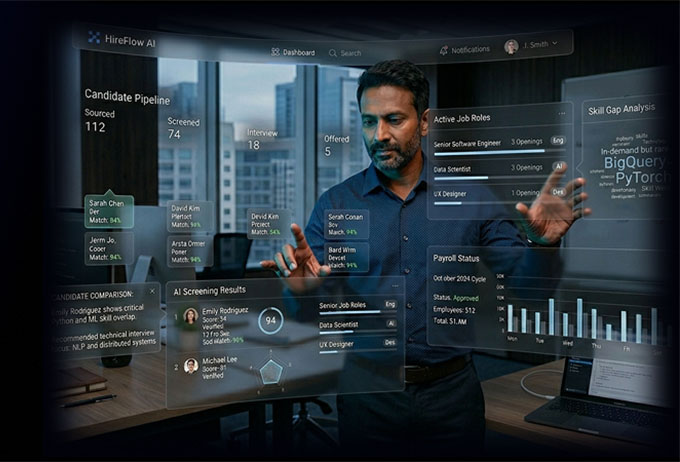
AI-powered digital job assistant that automates repetitive job search tasks, provides personalized guidance, and helps job seekers manage applications efficiently.
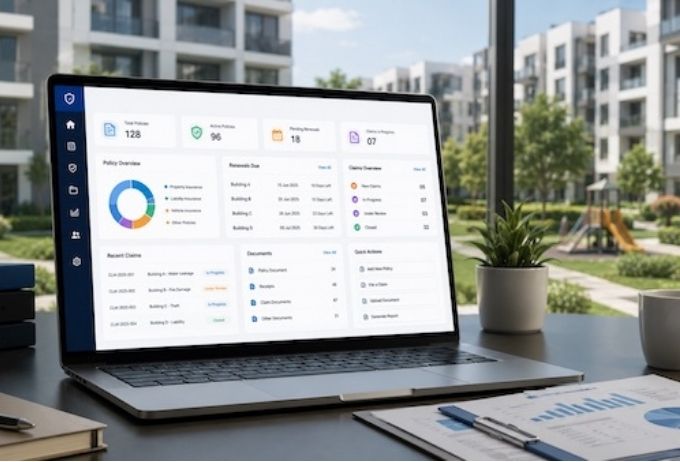
Icanio builds insurance management platforms that automate policy renewals, claims, compliance, and document management. It cuts operational costs by 30%, speeds claims by 50%, and

Icanio builds cloud LIMS platforms that automate sample tracking and reporting. It cuts manual effort by 70%, delivers 3x faster reports, and ensures QR-verified results.
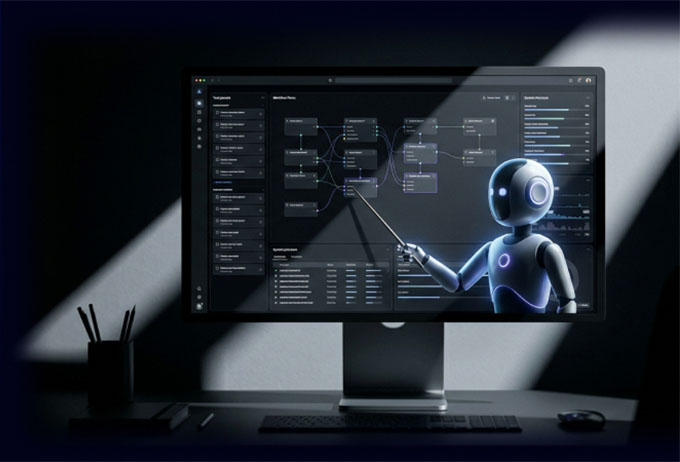
Icanio builds enterprise agentic AI frameworks that optimize multi-agent workflows and LLM integration. It improves stability by 40%, enhances reasoning by 3x, and enables scalable
Yes. We build LMS integrations that connect learning management systems with student information systems, single sign-on, and content libraries, so institutions do not need to replace existing infrastructure.
It is a system that personalizes content pacing and difficulty based on learner performance. We can start with a rules-based approach and evolve toward a data-driven model as usage data accumulates.
Yes. We architect virtual classroom platforms on scalable cloud infrastructure specifically to support large live sessions without degraded video or collaboration performance.
Yes. We build for K-12 and higher education institutions as well as edtech companies building commercial learning products, adapting our approach to each organization's scale and goals.
Yes. We build accessibility features, including captioning, screen-reader support, and flexible pacing, into virtual classroom platforms and LMS integrations so learning experiences work for the full range of learners an institution serves.
Talk to our experts about how our approach fits your sector’s requirements.
Quick Links
Careers
Internship
Contact Sales
© 2025
Icanio - All rights reserved.