
Vehicular Health Monitoring Digital Twin PoC
ICANIO built an AI-powered healthcare record digitization platform that cut manual data entry by 60% and improved patient record accessibility 4x.
AI AGENTIC FRAMEWORK · HEALTHCARE · CLINICAL AUTOMATION
An end-to-end AI automation for medical record extraction, EHR syncing, and ABHA compliance – zero manual entry required.
A healthcare AI assistant is an end-to-end clinical documentation platform that extracts, structures, and syncs medical records using AI eliminating manual data entry and enabling national health platform compliance. Clinical documentation AI powered by ICANIO’s Gemini 1.5 Flash implementation reduced manual documentation by 70%, cut operational costs by 40%, and tripled clinical staff productivity by replacing paper-based workflows with an intelligent, ABHA-ready digital ecosystem. ICANIO Technologies, built and deployed this healthcare AI assistant as a six-component, full-stack AI transformation for a healthcare partner with decades of clinical operations experience.
Healthcare organisations with decades of clinical operations experience continue to face a documentation crisis that has resisted incremental solutions. Manual charting, paper-based records, and siloed data systems create physician fatigue, reduce patient throughput, and expose organisations to growing compliance risk as national digital health mandates accelerate. For healthcare providers operating across Ayurveda and Allopathy care modalities in India, the challenge is compounded by the need to maintain dual documentation standards while meeting ABHA EHR integration requirements that are now central to national health interoperability policy.
ICANIO approached this as a full-stack clinical documentation AI transformation not a partial digitisation effort. The goal was to deliver immediate operational gains through AI medical records automation while building the interoperable, compliance-ready infrastructure that future-proofs clinical data management at scale. The result was a healthcare AI assistant architecture powered by Gemini 1.5 Flash that eliminated manual transcription entirely, achieved seamless ABHA EHR integration, and delivered measurable productivity and cost outcomes within the first operational quarter.
“Manual documentation was treated as an unavoidable cost of clinical operations not as a solvable AI and automation problem. That framing had to change first.”
Without structured AI medical records automation, clinical data remained trapped in paper files impossible to index, impossible to sync, and impossible to analyse across patient populations. Physicians and administrative staff operated reactively, managing records manually with no tooling to streamline or automate the documentation process. The absence of a healthcare AI assistant created compounding inefficiencies that affected every layer of clinical operations, from individual patient consultations to population-level health management. Five distinct failure modes defined the pre-deployment state.
6 – 8 hours of physician time consumed per 100 patients non-negotiable time unavailable for clinical care delivery
Paper records physically inaccessible for analytics, patient history review, or cross-referencing information latency in every clinical decision
Zero interoperability with ABHA and national EHR platforms exposing the organisation to compliance risk and blocking patient data portability
Siloed management of Ayurveda and Allopathy records preventing unified patient views and increasing administrative overhead
No structured patient history analytics population health management, trend analysis, and clinical outcome tracking all impossible
Each of these failure modes reinforced the others. Manual transcription created data inaccessibility, which prevented clinical documentation AI from being applied retroactively. Compliance risk grew with every paper record that was never synced to the national health platform. Care fragmentation meant that even when records did exist, they could not be used across care modalities. The entire system was designed around human effort rather than AI medical records automation and the cost of that design choice was measured in physician hours, administrative overhead, and missed compliance deadlines.
ICANIO deployed a unified healthcare AI assistant architecture powered by Gemini 1.5 Flash, covering the full clinical documentation lifecycle from record ingestion to ABHA-compliant syndication. Rather than addressing individual pain points in isolation, ICANIO engineered a six-component pipeline in which each module feeds the next ensuring that clinical documentation AI operates as a seamless, end-to-end system rather than a collection of disconnected tools. The architecture was designed from day one to support ABHA EHR integration as a native output, not a downstream migration task.
01
High-speed medical record extraction engine that converts paper-based clinical documents into structured digital data, eliminating manual transcription entirely from the intake workflow.
02
AI-powered parser that extracts symptoms, vitals, and diagnostics from unstructured clinical text, mapping raw content to standardized clinical fields with high accuracy and zero manual correction.
03
Rapid clinical decision support layer that generates structured patient summaries from raw records, enabling physicians to review history and make decisions without reading through full document stacks.
04
Seamless national health integration layer that syncs structured patient records directly with the ABHA platform, ensuring full compliance with India’s interoperability and GTM strategy.
05
Standardized format support for both Ayurveda and Allopathy clinical data, enabling unified record management across care modalities without loss of system-specific clinical context.
06
Live monitoring interface for clinical data accuracy, giving operations teams full visibility into extraction quality, sync status, and compliance adherence across all processed records.
The this AI platform implementation fundamentally changed how clinical operations managed patient data turning a paper-heavy documentation burden into an automated, interoperable, and AI-governed digital practice. Results were sustained through ongoing governance, not one-time optimisation.

AI automation reduced manual data entry by 70%, lowered operational costs by 40%, and tripled staff productivity across healthcare workflows.
Reduction in manual data entry and paperwork
Increased clinical staff productivity and patient throughput
Health visibility via structured summaries & patient data analytics
Lower operational costs for medical record management
Workflows with AI-powered paper-to-digital processing
Compliance via an ABHA-ready interoperability & GTM strategy
01
Clinical documentation AI that digitises records without building ABHA EHR integration in parallel creates a second migration project downstream. ICANIO’s experience on this engagement confirms that compliance infrastructure must be engineered alongside extraction and storage from the very first sprint. Retrofitting ABHA integration onto an existing AI medical records automation system is significantly more costly in time, engineering effort, and operational disruption than building it as a native output from the start. Healthcare technology leaders commissioning this AI platform platforms should treat compliance as a design constraint, not a delivery phase.
02
Ayurveda and Allopathy records managed in separate silos prevent cross-modality insight and increase administrative overhead across every clinical function. A standardised format layer the kind that ICANIO’s this AI platform delivers through its hybrid support component is essential to any integrated clinical data strategy. Without it, clinical documentation AI tools can only serve one modality at a time, leaving organisations with two parallel AI medical records automation systems rather than one unified platform. The engineering investment in unified data standards pays compounding dividends as clinical operations scale.
03
Every Gemini 1.5 Flash healthcare extraction in this engagement was monitored through the real-time validation dashboard before surfacing in clinical workflows. This is not a peripheral governance feature it is the foundation on which clinical adoption of any this AI platform is built. Physicians will not act on AI-generated summaries or diagnostics that they cannot trust. Accuracy assurance through real-time validation transforms clinical documentation AI from a back-office efficiency tool into a front-line clinical decision support capability.
Healthcare documentation is not a peripheral administrative task it is the foundation of safe, effective, and scalable patient care. This engagement demonstrates that with the right healthcare AI assistant framework, organisations can eliminate manual bottlenecks rapidly, achieve national compliance interoperability, and fundamentally shift clinical operations from reactive paperwork to proactive, data-driven decision-making.
By treating documentation as an AI-solvable engineering challenge from the outset combining clinical documentation AI, automated OCR, ABHA-compliant EHR sync, and real-time validation ICANIO helped this partner build a clinical data foundation that will continue to deliver compounding value as their operations scale. The 70% reduction in manual documentation, 40% cost saving, and threefold productivity gain are not one-time outcomes. They are the baseline from which every future improvement in this organisation’s clinical operations will be measured.
This AI platform is an AI-powered platform that automates clinical documentation, extracts structured data from medical records, and syncs patient information with national health platforms like ABHA. In ICANIO's implementation, this AI platform reduced manual documentation by 70%, tripled clinical staff productivity, and delivered full ABHA integration compliance converting a paper-based documentation burden into an automated, AI-governed digital practice for a healthcare partner in India.
This documentation AI goes beyond standard OCR by understanding the clinical context of extracted text identifying symptoms, vitals, diagnostics, and care modality from unstructured records, and mapping them to standardised clinical fields. ICANIO's this documentation AI implementation uses Gemini 1.5 Flash to interpret medical shorthand, abbreviations, and domain-specific terminology, producing structured outputs that feed directly into physician decision support and ABHA integration workflows without manual correction.
An AI medical records automation engagement covering OCR, clinical parsing, and ABHA EHR integration typically takes 8 to 12 weeks from discovery to production. ICANIO provides detailed estimates after a no-charge discovery workshop conducted remotely or on-site at the client's facility.
ABHA integration compliance is built into ICANIO's this AI platform architecture as a native output not a downstream migration. Every record processed through the this documentation AI pipeline is automatically synced to the ABHA platform through a dedicated connector. The real-time validation dashboard monitors sync status, flags failures, and provides compliance reporting across all processed records. ICANIO's ISO 9001:2015 and ISO 27001 certified delivery processes ensure that ABHA integration operates under enterprise grade data security and governance standards.
Yes. ICANIO's this AI platform includes a dedicated hybrid care support component that processes both Ayurveda and Allopathy clinical records under a unified data standard preserving system-specific clinical terminology while enabling cross-modality patient views. This is a purpose-built capability for Indian healthcare organisations operating integrated traditional and modern medicine practices, and it addresses one of the most persistent barriers to unified this documentation AI adoption in the country's diverse healthcare ecosystem.
Every extraction processed by ICANIO's healthcare AI assistant is monitored through a real-time validation dashboard before it surfaces in any clinical workflow. The dashboard provides live visibility into extraction accuracy, ABHA EHR integration sync status, and compliance adherence across all processed records flagging anomalies before they reach physicians. This validation layer is not a back-office governance tool. It is the mechanism through which clinical documentation AI earns physician trust, because clinicians will only act on AI-generated summaries and diagnostics when they have confidence in the accuracy assurance behind them.

ICANIO’s healthcare AI and engineering team is available for a no-obligation discovery call to assess your this documentation AI requirements, map your ABHA integration readiness, and outline an medical record AI automation delivery plan suited to your organisation’s scale, compliance environment, and clinical workflows.
ICANIO built an AI-powered healthcare record digitization platform that cut manual data entry by 60% and improved patient record accessibility 4x.
ICANIO built an AI-powered healthcare record digitization platform that cut manual data entry by 60% and improved patient record accessibility 4x.

ICANIO built a digital healthcare platform integrating patient records, telemedicine, EHR, billing, wearables, and AI insights, reducing administrative workload by 40% and improvin

ICANIO built a healthcare backend engineering platform that delivered services 2x faster, reduced operational risk by 30%, and improved scalability, reliability, and integration.
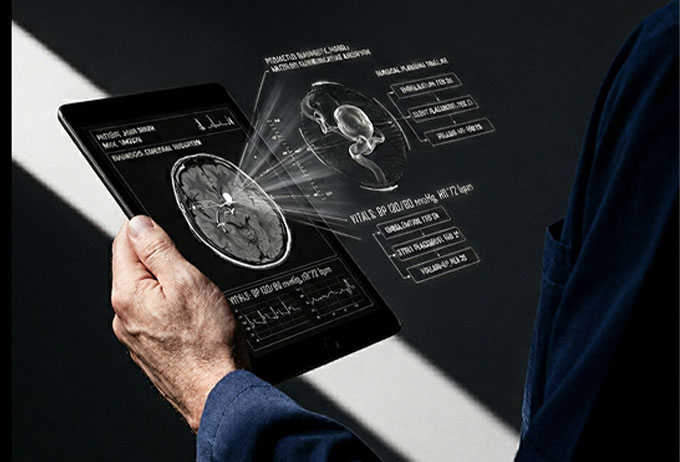
ICANIO built an AI-powered healthcare record digitization platform that cut manual data entry by 60% and improved patient record accessibility 4x.

ICANIO built a multi-tenant LLM fine-tuning pipeline on Azure OpenAI with isolated client models, automated DeepEval quality gates, MLflow tracking, and complete training lineage.
Quick Links
Careers
Internship
Contact Sales
© 2025
Icanio - All rights reserved.
