


Vehicular Health Monitoring Digital Twin PoC
ICANIO built an AI-powered healthcare record digitization platform that cut manual data entry by 60% and improved patient record accessibility 4x.
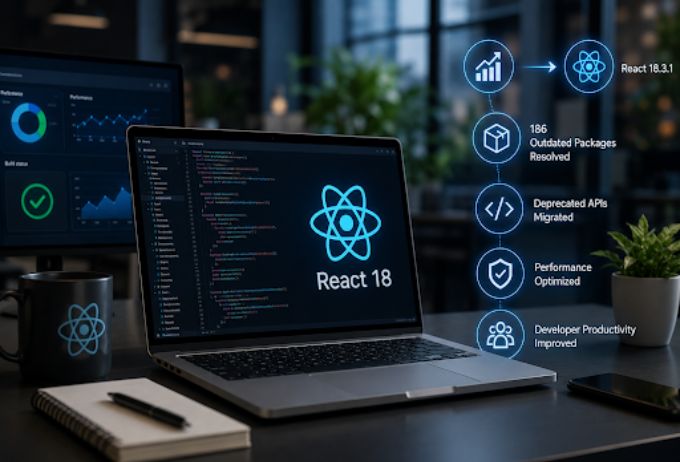
JDK 17 MIGRATION . JAVA MODERNIZATION . LEGACY UPGRADE
This Java application modernization upgraded a legacy application from JDK 8 to JDK 17, improving security, performance, scalability, and compatibility with modern tools and cloud environments.
Java application modernization migrates legacy applications from end-of-life JDK 8 to JDK 17, refactoring deprecated APIs and updating toolchains to resolve security, compliance, and performance gaps. ICANIO completed this Java application modernization with a 40% improvement in application performance and a threefold strengthening of security compliance posture.
Legacy Java applications running on JDK 8 faced security risks, compliance issues, limited scalability, and incompatibility with modern build tools and cloud platforms, hindering performance and future-ready integration. ICANIO’s partner was facing exactly that gap: applications on JDK 8 causing security vulnerabilities and compliance issues from outdated, unsupported Java versions, incompatibility with modern build tools and frameworks, challenging cloud platform integration due to legacy constraints, and JVM inefficiencies limiting performance and application scalability.
ICANIO addressed this by migrating the Java application from JDK 8 to JDK 17 rather than patching the existing runtime in place. The objective was to analyze compatibility and implement the necessary code changes, refactor deprecated APIs to align with JDK 17 standards, update the development environment for modern Java toolchains, perform comprehensive testing to ensure stability post-migration, and enable future-ready integration with libraries and cloud platforms.
The result was a 40% improvement in application performance speed and a threefold strengthening of security compliance posture, with a future-ready platform scalability foundation, a 50% reduction in technical debt burden, enhanced code maintainability, and 35% faster runtime processing efficiency.
“An application still running on JDK 8 isn’t stable, it’s on borrowed time, accumulating security exposure with every patch Oracle no longer ships for it.”
Legacy Java applications running on JDK 8 faced security risks, compliance issues, limited scalability, and incompatibility with modern build tools and cloud platforms, hindering performance and future-ready integration.
Existing applications on JDK 8 caused security vulnerabilities, and compliance issues arose from outdated and unsupported Java versions on top of that.
The application was incompatible with modern build tools and frameworks, blocking adoption of current development standards.
Cloud platform integration was challenging due to legacy constraints, limiting how the application could be deployed and scaled.
JVM inefficiencies limited performance and application scalability, leaving the application slower than it needed to be under load.
Deprecated APIs increased technical debt and maintenance overhead, making every future change more expensive than it should have been.
Icanio migrated the Java application from JDK 8 to JDK 17, refactoring APIs, updating environments, and performing testing to ensure security, performance, and scalability improvements for modern deployments. The solutions included:
01
Migrated the legacy Java application from JDK 8 to JDK 17, resolving the security and compliance exposure of the end-of-life runtime.
02
Analyzed compatibility and implemented necessary code changes, catching version-specific issues before they became production problems.
03
Refactored deprecated APIs to align with JDK 17 standards, clearing the technical debt that had accumulated across years of the legacy runtime.
04
Updated the development environment to support modern Java toolchains, aligning the build process with current standards.
05
Performed comprehensive testing to ensure stability post-migration, validating behavior before the application reached production.
06
Enabled future-ready integration with libraries and cloud platforms, positioning the application for whatever comes after JDK 17.
This Java application modernization delivered outcomes across every dimension of the original legacy-runtime problem, converting a security-exposed, JDK 8 application into a fast, compliant, cloud-ready platform.

Performance improved through ICANIO’s AI-driven optimization, delivering measurable operational gains while maintaining financial accuracy.
Application performance speed
Security compliance posture
Platform scalability foundation
Technical debt burden
System maintainability standards
Runtime processing efficiency
01
Migrating the runtime from JDK 8 to JDK 17 alone would not have resolved the technical debt burden. Refactoring deprecated APIs to align with JDK 17 standards at the same time is what let the 50% reduction in technical debt actually stick.
02
Updating the development environment to support modern Java toolchains before comprehensive testing began is what let the testing phase validate the application under conditions that actually matched production, instead of surfacing toolchain issues late.
03
Legacy constraints had been making cloud platform integration challenging for years. Explicitly enabling future-ready integration with libraries and cloud platforms as part of this Java application modernization is what turned cloud readiness into a planned result rather than an assumption.
Running a legacy application on JDK 8 might have been tolerable when security patching was still available, but for an application now facing unsupported infrastructure and growing technical debt, it had become a real constraint on performance and compliance. This engagement demonstrates that a single Java application modernization can resolve security, performance, and technical debt gaps within one structured programme rather than three separate initiatives.
By completing a JDK 17 migration, refactoring deprecated APIs into a cloud-ready Java application, and modernizing the toolchain as part of this legacy Java upgrade, ICANIO helped this partner improve application performance by 40% and strengthen security compliance posture threefold. The refactored Java APIs and future-ready scalability foundation delivered through this engagement are the foundation every future release this application ships will run on.
Java application modernization migrates legacy applications to a current JDK version, which matters because JDK 8 no longer receives security patches and is incompatible with modern build tools and cloud platforms.
A JDK 17 migration involves analyzing compatibility, refactoring deprecated APIs, updating the development environment, and comprehensive testing, not just switching the runtime version number.
This is a legacy Java upgrade because it resolves accumulated technical debt, deprecated APIs, and toolchain incompatibility, not just the immediate security exposure of running an unsupported JDK version.
The result is a cloud-ready Java application because the migration specifically enabled future-ready integration with libraries and cloud platforms that legacy JDK 8 constraints previously blocked.
Refactored Java APIs were validated through comprehensive testing performed after the migration, confirming application stability before the modernized application reached production.
This Java application modernization improved application performance by 40% and runtime processing efficiency by 35%, while strengthening security compliance posture threefold.
From bold ideas to breakthrough execution – our case studies showcase how we transform business challenges into innovation-led success stories.
ICANIO built an AI-powered healthcare record digitization platform that cut manual data entry by 60% and improved patient record accessibility 4x.
ICANIO built an AI-powered healthcare record digitization platform that cut manual data entry by 60% and improved patient record accessibility 4x.

ICANIO built a digital healthcare platform integrating patient records, telemedicine, EHR, billing, wearables, and AI insights, reducing administrative workload by 40% and improvin

ICANIO built a healthcare backend engineering platform that delivered services 2x faster, reduced operational risk by 30%, and improved scalability, reliability, and integration.
ICANIO built an AI-powered healthcare record digitization platform that cut manual data entry by 60% and improved patient record accessibility 4x.

ICANIO built a multi-tenant LLM fine-tuning pipeline on Azure OpenAI with isolated client models, automated DeepEval quality gates, MLflow tracking, and complete training lineage.
Quick Links
Careers
Internship
Contact Sales
© 2025
Icanio - All rights reserved.
