Bank API Data Acquisition Portal: 50% Faster
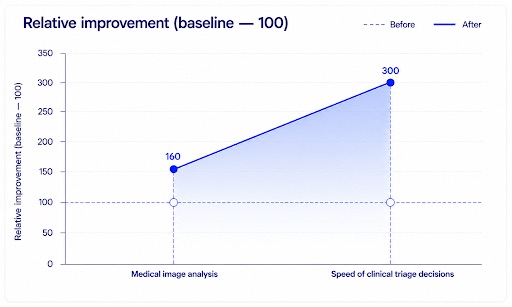
Icanio builds AI medical image diagnostic systems using deep learning to detect abnormalities, accelerate clinical triage by 3x, and reduce image analysis time by 60%.
AI DIAGNOSTICS . DEEP LEARNING IMAGING . HEALTHCARE AI
Icanio built an AI medical image diagnostic system for a healthcare partner facing diagnostic delays from manual image interpretation and limited specialist availability.
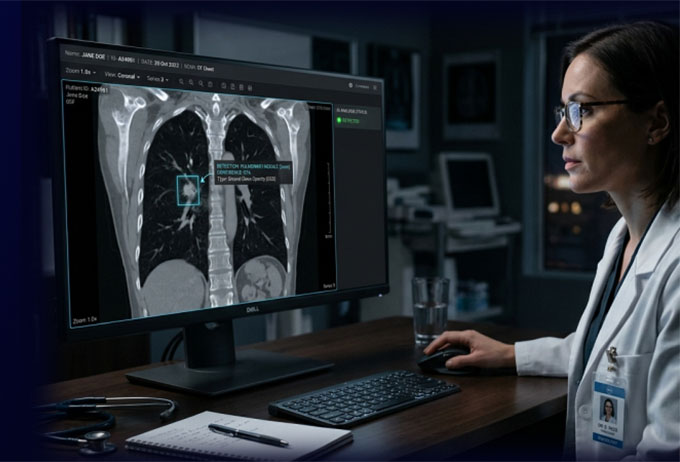
An AI medical image diagnostic system uses deep learning to analyze medical images, detect abnormalities, and deliver fast preliminary diagnostic insights through a scalable web-based interface. ICANIO built this AI medical image diagnostic system to assist expert clinical review, cutting medical image analysis time by 60% and improving clinical triage speed threefold.
Manual interpretation of medical images might work when case volumes are low, but it becomes a genuine liability once a healthcare provider faces growing demand and limited specialist availability. ICANIO’s healthcare partner was facing exactly that gap: manual interpretation delaying diagnostic decision-making, limited specialist availability slowing visual condition assessments, high case volumes pressuring imaging workflows, and human interpretation introducing variability into diagnostic results.
ICANIO addressed this by building an AI Medical Image Diagnostic System rather than adding more manual review capacity. The objective was to train deep learning models to detect abnormalities directly from medical images, build a web interface for instant diagnostic feedback after image upload, implement multi-class classification to identify normal and abnormal conditions, and automate analysis to reduce manual interpretation workload, all built as a clinical decision support system that assists expert clinical review rather than replacing it.
The result was 60% faster medical image analysis, a threefold improvement in the speed of clinical triage decisions, and high diagnostic consistency that reduced the variability inherent in manual visual interpretation.
“A specialist’s time is the scarcest resource in medical imaging, an AI medical image diagnostic system does not replace their judgment, it decides which cases reach them first.”
Healthcare providers face delays interpreting diagnostic images due to manual analysis and limited specialist availability, creating growing demand for scalable AI tools that enable faster, reliable image-based diagnostics.
Manual interpretation of medical images delays diagnostic decision-making, and those delays can impact timely medical intervention when a case needs fast action.
Limited specialist availability slows visual medical condition assessments, leaving cases waiting on a scarce resource.
High case volumes increase pressure on medical imaging workflows, straining teams that are already stretched thin.
Human interpretation can lead to variability in diagnostic results, so the same case can be read differently depending on who reviews it.
Healthcare systems require scalable image diagnostic solutions that can grow with case volume instead of depending on adding more specialists.
Icanio Technologies developed an AI-powered medical image diagnostic system using deep learning to analyze images, detect abnormalities, and provide fast preliminary insights through a scalable web-based interface. The solutions included:
01
Deep learning models detect abnormalities directly from medical images, giving clinicians a fast first read on what to look at closely.
02
A web interface enables instant diagnostic feedback after image upload, so results are available the moment a case is submitted.
03
Multi-class classification identifies normal and abnormal image conditions, giving reviewers a structured starting point instead of a blank image.
04
Automated analysis reduces manual diagnostic interpretation workload, freeing specialists to focus on the cases that need their judgment most.
05
Scalable AI systems support high-volume image analysis environments, so the platform keeps pace as case volume grows.
06
A preliminary diagnostic layer assists expert clinical review workflows, giving specialists a head start rather than replacing their final judgment.
This AI medical image diagnostic system delivered outcomes across every dimension of the provider’s original diagnostic bottleneck, converting slow, variable manual review into fast, consistent medical imaging AI triage at scale.
Performance improved through ICANIO’s AI-driven optimization, delivering measurable operational gains while maintaining financial accuracy.
Medical image analysis
Speed of clinical triage decisions
Reduced variability in visual interpretation
AI-powered abnormality detection
Supports large-scale imaging workflows
Supports faster review
01
Positioning the model as a preliminary diagnostic layer that assists expert clinical review, rather than a replacement for specialist judgment, is what let this AI medical image diagnostic system earn trust in a clinical workflow.
02
Automated analysis alone would not have cut workload if results still took hours to reach a reviewer. Pairing deep learning detection with a web interface that gives instant diagnostic feedback after upload is what actually reduced the manual interpretation burden.
03
Multi-class classification did not just automate a task, it gave every case the same standard of review, directly reducing the variability that comes from different reviewers interpreting the same image differently.
Manual interpretation of medical images might be workable for a low-volume clinic, but for a healthcare provider facing rising case volumes and limited specialist availability, it had become a real constraint on how quickly patients could be diagnosed. This engagement demonstrates that a single AI medical image diagnostic system can resolve speed, consistency, and scale gaps within one structured programme rather than three separate initiatives.
By training deep learning models to detect abnormalities, building instant web-based diagnostic feedback, and layering the system as a preliminary read that assists expert clinical review, ICANIO helped this partner cut medical image analysis time by 60% and improve clinical triage speed threefold. The multi-class classification, automated analysis, and scalable AI architecture delivered through this engagement are the foundation any future imaging workload this provider takes on will run on. This shift toward medical imaging AI triage, built on a scalable diagnostic AI platform, is what let the provider handle rising case volumes without adding headcount.
An AI medical image diagnostic system uses deep learning to analyze medical images and detect abnormalities automatically. Healthcare providers need one because manual interpretation and limited specialist availability create diagnostic delays that scalable AI tools can close.
No. The AI medical image diagnostic system operates as a preliminary diagnostic layer that assists expert clinical review, giving specialists a fast first read rather than a final, unreviewed diagnosis.
The web interface returns diagnostic feedback the moment an image is uploaded, so clinicians see a preliminary read without waiting for a queued manual review.
Multi-class classification identifies specific normal and abnormal image conditions rather than a single binary flag, giving reviewers more structured context to work from.
This AI medical image diagnostic system cut medical image analysis time by 60% and improved the speed of clinical triage decisions threefold compared to manual review.
Yes. It was built as a scalable AI system to support high-volume image analysis environments, so growing case volume does not require adding proportionally more manual review capacity.
From bold ideas to breakthrough execution – our case studies showcase how we transform business challenges into innovation-led success stories.
Icanio builds AI medical image diagnostic systems using deep learning to detect abnormalities, accelerate clinical triage by 3x, and reduce image analysis time by 60%.
Quick Links
Careers
Internship
Contact Sales
© 2025
Icanio - All rights reserved.