05 Mar 2026

Designing AI Systems for the Real World

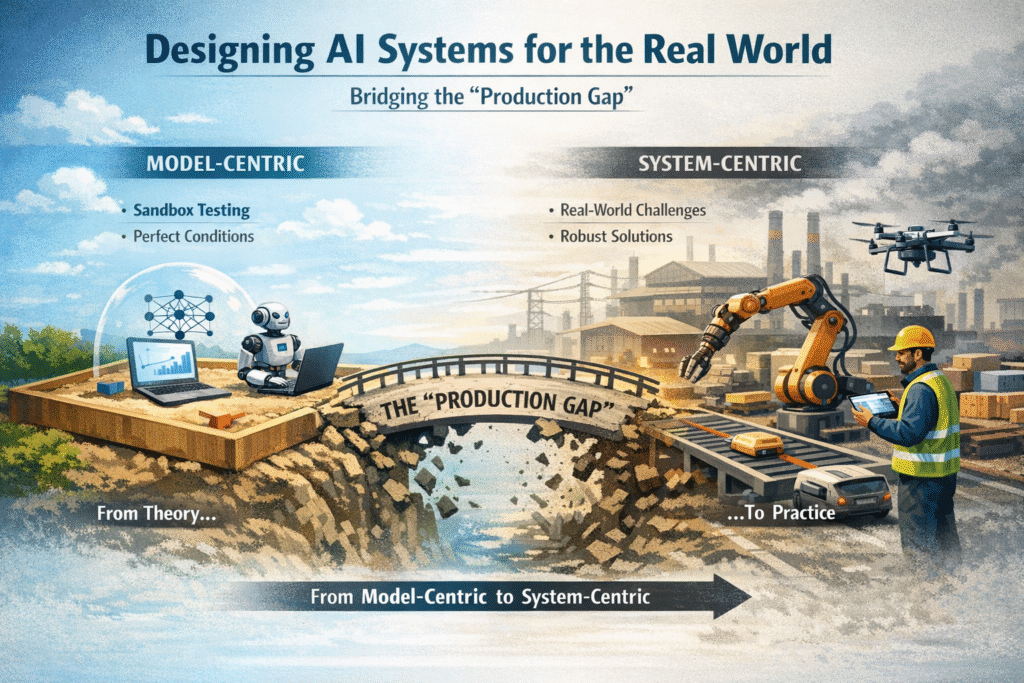
In 2026, we’ve moved past the era of being impressed by chatbots. Today, the real value lies in “Industrial AI”—systems that don’t just predict, but act. However, there is a massive gap between a model that works in a sandbox and a system that survives the “messy” reality of industry.

To bridge this gap, we must shift our focus from Model-Centric design to System-Centric design.

1. Shift to Agentic Architectures

Traditional AI was a “one-and-done” request: you ask a question, it gives an answer. In industrial environments, we now use Agentic AI. These systems are designed to plan, use tools (like your ERP or CRM), and execute multi-step workflows.

  • Modular Design: Instead of one giant model, use a swarm of smaller, specialized agents.
  • The Model Context Protocol (MCP): Use standardized frameworks like MCP to give your AI awareness of the specific technical “context” of your industry software.

2. Design for "High-Stakes" Reliability

In a lab, an 85% accuracy rate is a success. In a hospital or a power grid, a 15% error rate is a catastrophe. Real-world systems require Guardrails and Contracts.

  • Strict Data Contracts: Define exactly what the AI can and cannot output. Use schemas to ensure the AI doesn’t “hallucinate” a part number that doesn’t exist.
  • Predictive vs. Generative: In 2026, we use Generative AI for communication but rely on Predictive AI for the actual decision logic. Don’t let a creative model decide the safety threshold of a steam valve.
  • Human-in-the-Loop (HITL): Design clear “handoff” points. If the AI’s confidence score drops below 90%, it should automatically flag a human operator.

3. Solving the Data Gravity Problem

Industry data is messy, siloed, and often physically “heavy” (stored at the edge).

  • Edge Intelligence: For manufacturing or robotics, process the data where it lives. Low-latency requirements mean your AI system must be “Edge-first.”
  • Interoperability: Your system is only as good as its data pipeline. 2026’s best systems use Data Clean Rooms to safely merge proprietary industry data with AI models without compromising privacy.

4. Governance as a Feature, Not a Hurdle

With the 2026 Global AI Governance Guidelines now in effect, “compliance” is no longer optional—it’s a design requirement.

Feature

Industrial Requirement

Explainability

Can the system explain why it rejected a loan or flagged a machine for repair?

Drift Monitoring

Real-world data changes (sensors age, markets shift). Is the model retraining itself?

Audit Trails

Every action taken by an AI agent must be logged for liability and safety reviews.

Conclusion: From Hype to Impact

Designing for the real world means designing for resilience over perfection. A system that handles errors gracefully is far more valuable than a “perfect” model that breaks when the Wi-Fi flickers or the data gets noisy.

The future belongs to those who build AI that plays well with others—both machines and humans.

FAQs

Model-Centric design focuses on the performance of the AI itself (e.g., "How high is the accuracy on this dataset?").

System-Centric design focuses on how that model interacts with the "messy" real world. This includes how it handles noisy sensor data, stays within regulatory guardrails, integrates with legacy software (like ERPs), and remains stable when the environment changes.

While a single large model is "smart," it’s often a "jack of all trades, master of none" and can be a single point of failure.

  1. Specialization: A swarm of smaller agents can be optimized for specific tasks (e.g., one for data retrieval, one for safety checking).
  2. Resilience: If one agent fails, the entire system doesn't necessarily crash.
  3. Context: Using frameworks like the Model Context Protocol (MCP) allows these agents to understand the specific technical language of your industry better than a general model could.

In 2026, we no longer rely on the AI's "honesty." We use Strict Data Contracts. By enforcing schemas (like JSON or Pydantic) on the AI's output, the system physically cannot output a result that doesn't fit a predefined format. Additionally, we separate Generative AI (used for summarizing or explaining) from Predictive AI (the math-heavy logic used for safety thresholds).

"Data Gravity" means that moving massive amounts of data to the cloud is slow and expensive.

  1. Latency: In robotics or power grids, a millisecond delay in decision-making can cause an accident.
  2. Privacy: Processing data at the "Edge" (locally on the machine) keeps sensitive proprietary data on-site, satisfying the 2026 Global AI Governance Guidelines.

If designed poorly, yes. If designed correctly, no. In modern systems, HITL acts as a Confidence-Based Handoff. The AI handles 99% of routine tasks but identifies when it is "confused" (e.g., a confidence score $< 0.90$). It then flags a human, providing them with a summary of the issue. This allows humans to act as supervisors rather than manual laborers.

Related Case Studies

From bold ideas to breakthrough execution — our case studies showcase how we transform business challenges into innovation-led success stories.

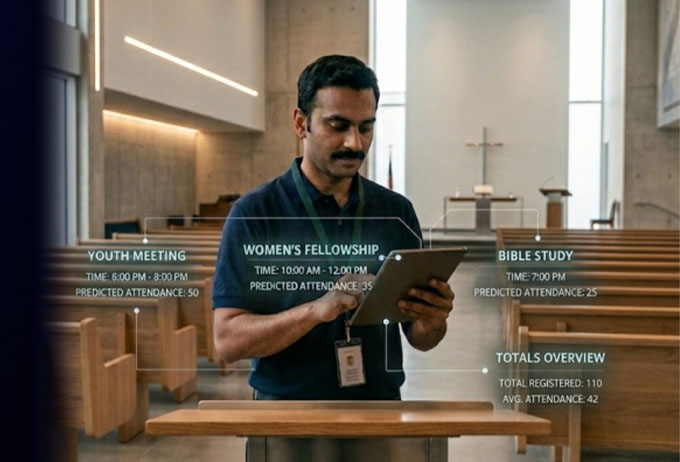
Icanio developed a centralized Church CRM platform to streamline member management, event coordination, staff oversight, and pastoral administration with dashboards, attendance tra

Icanio developed Ranger Fusion and Shengel to digitize corporate and industrial operations, streamlining HR, payroll, workforce tracking, and site management through mobile apps wi

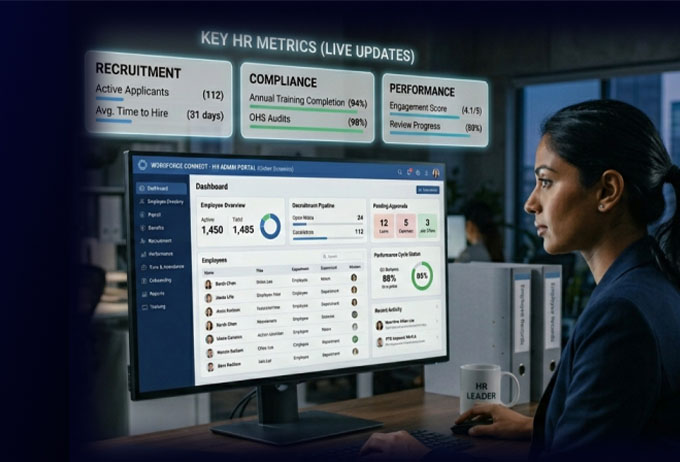
Icanio built a SaaS Internal Employee Portal centralizing HR, Finance, and Project operations, streamlining onboarding, training, evaluations, and providing real-time dashboards to

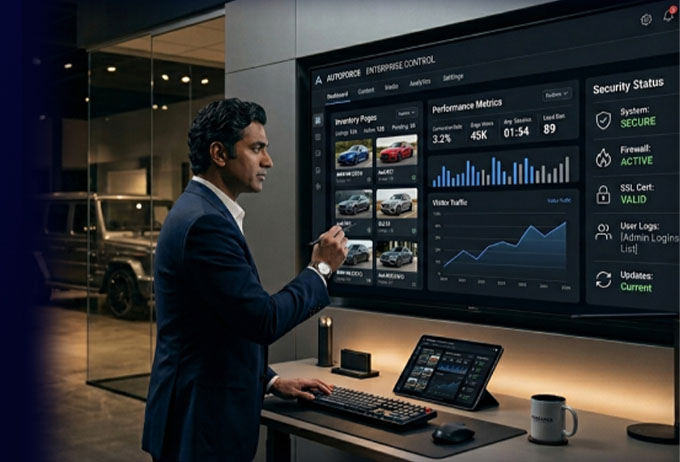
Content shouldn’t slow your website down. Automate updates, events, and layouts with a flexible content platform that empowers teams to publish faster and manage digital experien

From legacy limitations to cloud-native performance—this TYPO3 evolution delivers automated CI/CD, enterprise security, and mobile-first design to power scalable digital experien

Manage properties smarter with a cloud-native platform that automates rent collection, maintenance tracking, and financial reporting—giving managers real-time visibility across e

Explore Related Services

What would your business look like with a platform built exactly around your workflows?
Explore our Application Development services for scalable digital products.